Lord’s Day 19 · Christ at the Right Hand
To Judge the Living and the Dead Reformed Confessions 8 min February 19, 2025
Taught by
Ryan Swale Immanuel United Reformed Church, Jordan, Ontario Read along About Transcript
Q50 Why the next words: “and sits at the right hand of God”?
Christ ascended to heaven, there to show that he is head of his church, the one through whom the Father governs all things.
Q51 How does this glory of Christ our head benefit us?
First, through his Holy Spirit he pours out gifts from heaven upon us his members. Second, by his power he defends us and preserves us from all enemies.
Q52 How does Christ’s return “to judge the living and the dead” comfort you?
In all distress and persecution, with uplifted head, I confidently await the very judge who has already offered himself to the judgment of God in my place and removed the whole curse from me. Christ will cast all his enemies and mine into everlasting condemnation, but will take me and all his chosen ones to himself into the joy and glory of heaven.
A growing library of films on the historic Reformed creeds and confessions. The Heidelberg Catechism is complete: all fifty-two Lord’s Days, taught by pastors from across the Reformed churches.
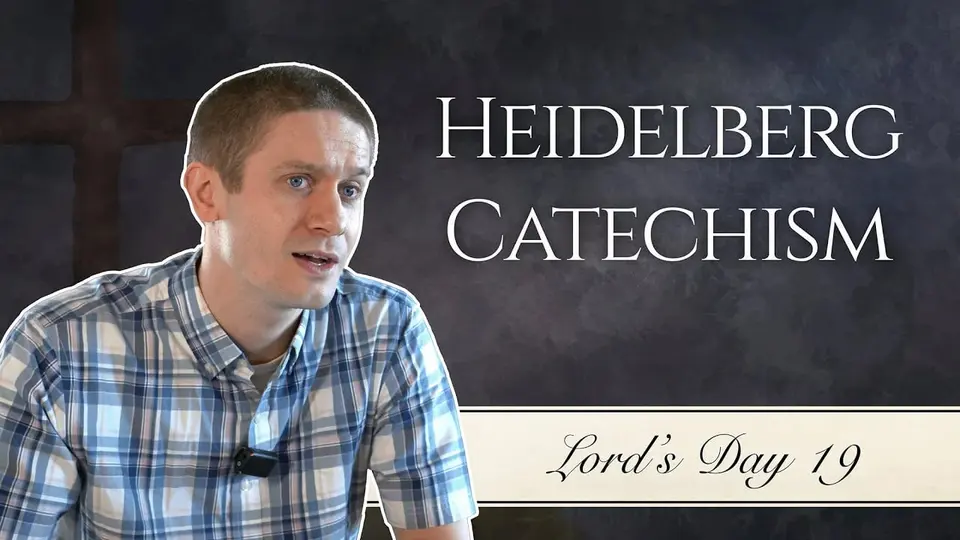
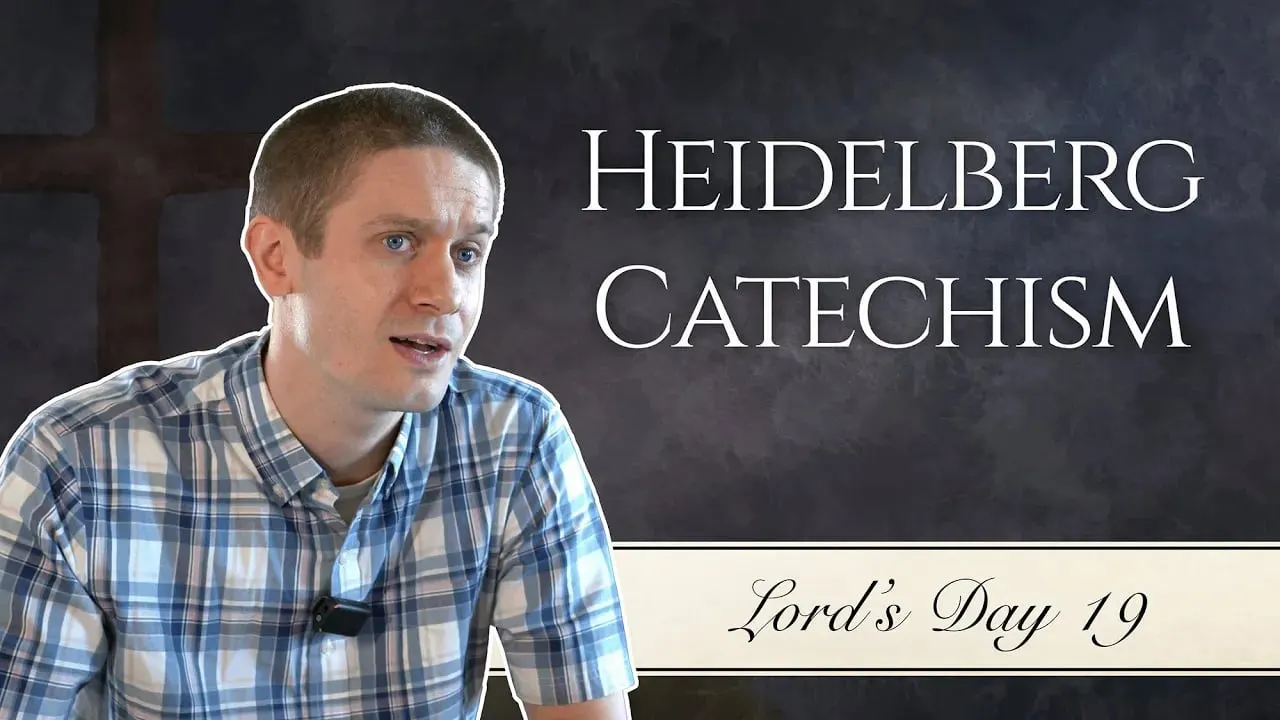
Ryan Swale is the pastor at Immanuel URC in Jordan, ON.
Free to watch, share and show in your church. Made by Faith to Film with the support of churches and believers.
0:00 Hardeberg catechism, Lord’s Day 19. 0:11 Why the next words and sits at the right hand of God? Christ ascended to heaven, there to show that he is head of his church, the one through whom the Father governs all things. 0:28 How does this glory of Christ our head benefit us? 0:33 First, through his Holy Spirit, he pours out gifts from heaven upon us, his members. 0:40 Second, by his power, he defends and preserves us from all enemies. 0:46 Then how does Christ's return to judge the living and the dead comfort you? 0:53 In all distress and persecution, with uplifted head, I confidently await the very judge who has already offered himself to the judgment of God in my place and removed 1:05 the whole curse from me. Christ will cast all his enemies and mine into everlasting condemnation, but will take me and all his chosen ones to himself, into the joy 1:20 and glory of heaven. Lord’s Day 19 is following up on what Lord’s Day 18 says about Christ's ascension, that he is there in heaven on our behalf as the head 1:34 of the church, the one through whom the Father governs all things. Lord’s Day 19 is reminding us that Christ is reigning there as King. As Paul says in Ephesians chapter 1:46 1, he is seated at God's right hand in the heavenly places far above all rule and authority and power and dominion, above every name that is named, not only in this age, but in the 1:59 to come. It says that he has put all things under his feet and he has given him as head over all things to the church. And Lord’s Day 19 reminds us of the presence of the kingdom, 2:14 that Jesus is already now king over all things, the one through whom the Father governs all things. As Jesus says in the Great Commission, "All authority in heaven and on earth has 2:26 been given to him." And then question 51 goes on to teach us that Jesus uses that power and authority for our benefit. From heaven, as king of the church, he pours out gifts on us, his members. 2:43 And Ephesians 4 is one of the places where the apostle reminds us what those gifts are in Ephesians 4. 2:51 He says that those include the word-centered gifts of apostles and prophets, evangelists, shepherds and teachers where Christ 2:59 as king of the church, wants to make sure that his word goes forth. And so he pours out these gifts so that as king, he might build his church. But then question 51 also reminds us that as our king 3:14 who governs all things and pours out gifts upon his church, that he also preserves us from all enemies. 3:21 Lord’s Day 48 later in the catechism reminds us that there are enemies of the kingdom of Christ, those who would seek to disrupt the advance of the kingdom of Jesus Christ and 3:35 who would conspire against his word. These are the kinds of enemies that we meet at the very beginning of the Psalms, who in Psalm 2 plot in vain against the Lord and his anointed, 3:46 who it says he is set as king on his holy hill. The beginning of the book of Psalms reminds us that the king who is seated in heaven has enemies. And those enemies 3:59 are also the enemies not only of the king but also of us his members. The comfort of Lord’s Day 19 is that Christ our head who is seated in heaven will 4:10 defend and preserve us from those enemies. In fact our catechism there cites Psalm 110 where it says that he will rule in the midst of his enemies and he will make them his footstool and shatter kings on the day of 4:25 his wrath. The very passages in the Bible that question 51 points us to assure us of the reality of enemies and yet they also assure us of Christ's victory over those enemies. 4:39 Indeed, it goes on in question 52 to say, "How does Christ return to judge the living and the dead comfort you?" 4:47 And it says, "In all distress and persecution with uplifted head, I confidently await the very judge who has already offered himself to the judgment of God in my place. 4:59 and removed the whole curse from me and will cast all his enemies and mine into everlasting condemnation, but take me and all his chosen ones to himself to the joy and glory of heaven. 5:16 And Lord’s Day 19 reminds us of the final victory of God's king, we are seated on his holy hill. 5:24 And it teaches us that this is something we can look forward to with uplifted head, waiting for the return of our king who will cast all his enemies and mine into everlasting condemnation. 5:36 Psalm 2 and Psalm 110 both look forward to that day. In fact, the rest of the Psalter in many ways has that hope in mind. I would suggest 5:47 that that's the meaning of the many judgment Psalms that cry out for the coming of this King. 5:54 How long, O Lord, until you will avenge? This is a prayer. 5:59 perhaps not an article of our faith that we think about often. 6:04 But in the Reformation context in which this was written, and in many parts of the world still today, it is a much loved doctrine. 6:12 For our brothers and sisters who suffer the assaults of the enemies of Christ's kingdom, they long for relief. 6:19 They long for justice. 6:21 They long, as our Belgic Confession says, for their innocence to be openly recognized by all and for the terrible vengeance God will bring on the evil ones who tyrannized, oppressed, and tormented them in this world. 6:35 It calls this a very pleasant and great moment comfort to the righteous and elect. And Lord’s Day 19 says the same thing, that it's something we look forward to with uplifted heads. One 19th century pastor 6:53 said, "Righteous retribution is one of the glories of the divine character." 6:59 If it is right that God should desire to exercise it, then it cannot be wrong for his people to desire him to exercise it. 7:09 Inasmuch as it is righteously inflicted by God, it must be right in him and must therefore be when in his hand a proper object of satisfaction. 7:19 to the godly. He's saying if Christ coming as king to judge the living and the dead is right, then it must be right, as Lord’s Day 19 and question 52 says, for us to find comfort in that. 7:34 For us even to look forward to it, as so many of the Psalms do. 7:39 with uplifted head. As God's people suffer in this world, our brothers and sisters, especially in other parts of the world, are afflicted. Lord’s Day 19 7:51 teaches us to long and pray for the coming of our King, to find comfort in the fact that he will return to Jesus. 7:59 judge the living and the dead. And so often the Lord’s Day 19 teaches us to pray even, so come Lord Jesus. 8:19 Thank you. Made automatically from the audio, so a word here or there may be wrong. Tap any line to play from there.
Study Lord’s Day 19 at reformedconfessions.org The full text, Scripture proofs, study questions and quizzes. 



 Now playing3 min

 Now playing8 min
 Now playing10 min
 Now playing9 min
 Now playing13 min
 Now playing8 min
 Now playing8 min
 Now playing9 min
 Now playing9 min
 Now playing9 min
 Now playing6 min
 Now playing9 min
 Now playing8 min
 Now playing8 min
 Now playing6 min
 Now playing11 min