Lord’s Day 37 · Oaths & Vows
Can Christians Take Oaths? Reformed Confessions 8 min April 6, 2026
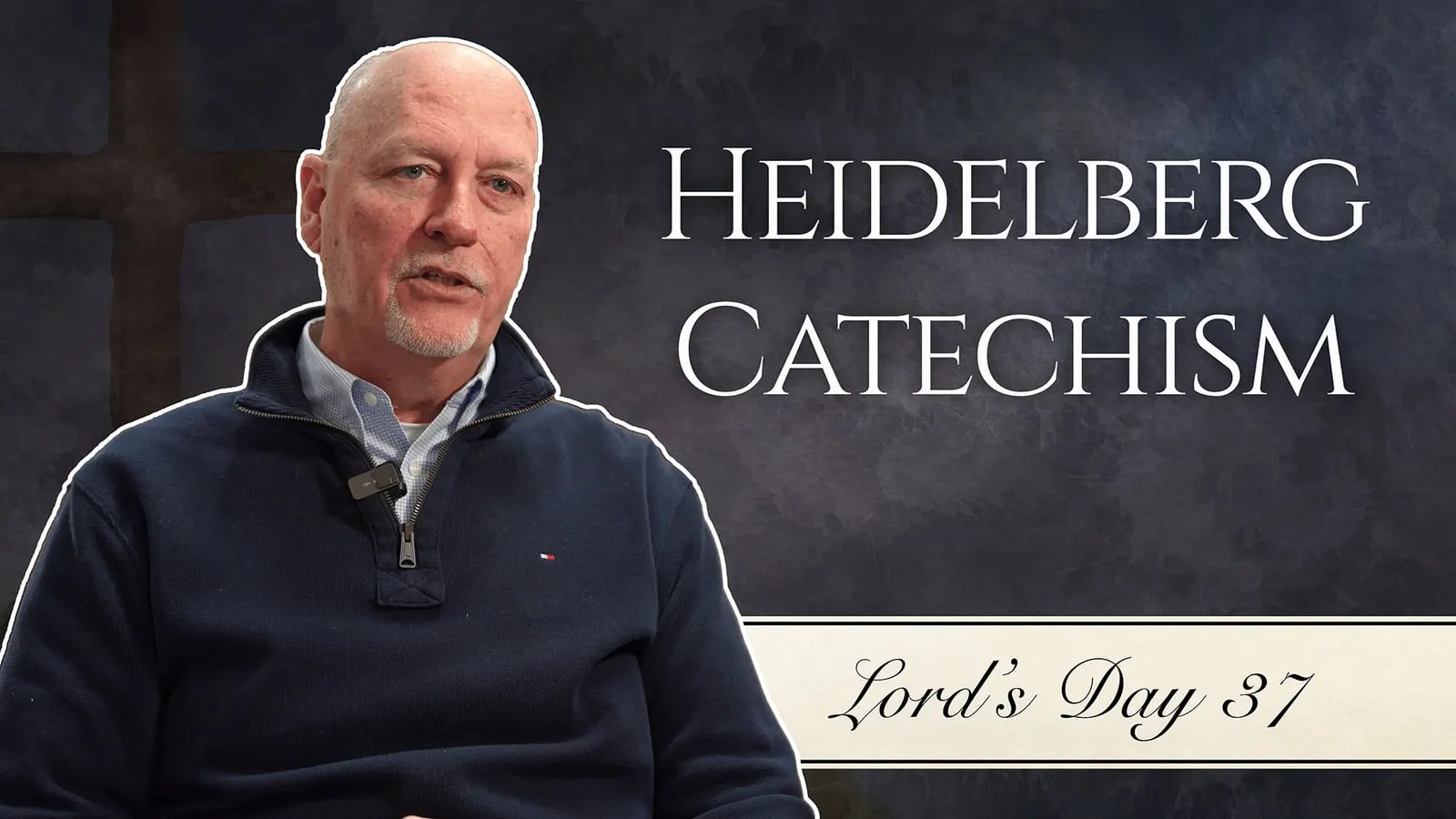
Taught by
Keith Davis Bethel, Calgary, Alberta Read along About Transcript
Q101 But may we swear an oath in God’s name if we do it reverently?
Yes, when the government demands it, or when necessity requires it, in order to maintain and promote truth and trustworthiness for God’s glory and our neighbor’s good. Such oath-taking is grounded in God’s Word and was rightly used by the saints in the Old and New Testaments.
Q102 May we also swear by saints or other created things?
No. A legitimate oath is calling upon God as the one who knows my heart to witness to the truth and to punish me if I swear falsely. No created thing is worthy of such honor.
A growing library of films on the historic Reformed creeds and confessions. The Heidelberg Catechism is complete: all fifty-two Lord’s Days, taught by pastors from across the Reformed churches.
Rev. Keith Davis has served as Bethel’s Pastor since January 23, 2015, after being ordained in 1998 following his graduation from Mid-America Reformed Seminary. Now marking over 20 years in pastoral ministry, he views this as a testimony to God’s faithfulness, echoing the spirit of “Ebenezer”: “Thus far has the Lord helped us” (1 Samuel 7:12). Before Bethel, he pastored two congregations in the United States. He and his wife Laura, originally from Illinois, have seven children and five grandchildren. While moving to Calgary meant leaving family behind, they have been deeply blessed and enjoy serving their church community. His hobbies include tennis, golf, chess, fishing, and organizing the annual Summit Reformed Youth Conference, one of his favorite weeks of the year.
Free to watch, share and show in your church. Made by Faith to Film with the support of churches and believers.
0:00 Heidelberg Catechism, Lord’s Day 37: But may we swear an oath in God's name, if we do it reverently? 0:16 Yes, when the government demands it, or when necessity requires it in order to maintain and promote truth and trustworthiness for God's glory and for our neighbor's good. Such oath-taking is grounded in God's 0:30 Word and was rightly used by the saints in the Old and New Testaments. May we also swear by saints or other created things No, a legitimate oath is calling upon God as the one who knows my heart to witness to 0:46 the truth and to punish me if I swear falsely. No created thing is worthy of such honor. 0:55 Lord’s Day 37 is unique in that we find that it is the Lord’s Day that deals with the same commandment. This is the only commandment of which this is true in the Heidelberg Catechism, that it dedicates, it devotes 1:07 two Lord's Days to it. And I believe partly because of what we said in Lord’s Day 36 of the importance of God's great name, that we don't blaspheme his name, but also that we take 1:20 his name upon our lips properly, so that first, but also because of the context of this very commandment in the day and age of the Reformation. And one of the things I found very helpful 1:33 is a commentary by Kevin DeYoung where he talks about that. He says, "For starters, the their pastoral council to ex-Catholics. 1:43 And you think of that, there were nuns, there were monks, there were priests who made these vows of celibacy before the Lord, a lifelong vow of celibacy, that now if they came to the Reformed faith, 1:56 that they would have to not only leave the Roman Catholic Church, but to bring break those vows that they had made. 2:02 So how do you minister to someone like that who's gonna be stricken in their conscience that this is wrong, I've made a vow? 2:09 And John Calvin even considered these vows and he considered them as being rash because they were all based upon the meritorious favor of God that by taking these vows, 2:19 These nuns, these priests, these monks had done so in order to gain God's favor. 2:24 So he mentioned that as well. 2:26 Not only were they to basically break those vows, but they were to repent that they had ever made them. 2:32 And then you take this and you go to the other extreme and you consider the Anabaptist who went all the way to the opposite extreme in the sense that they didn't allow oaths of any kind. 2:43 They went to Matthew chapter 5 where Jesus says, "Let your yes be yes and your no be no." 2:48 Well, that quote by Jesus came in the context of the people of his day, Pharisees and others who were taking oaths, but they were taking oaths by all types of things, 2:59 not by the name of God, but by other things, and they were doing so for a specific purpose. 3:04 Jesus said in Matthew 5, "But I say to you, do not swear at all, neither by heaven, for it is God's throne, nor by earth, for it is his footstool, nor by Jerusalem, for it is 3:16 the city of the great king, nor shall you swear by your head because you cannot make one hair white or black. 3:24 And also Matthew 23: "Therefore he who swears by the altar swears by it and all things on it; he who swears by the temple swears by it and by him who dwells in it; and he who 3:35 swears by heaven swears by the throne of God and by him who sits on it." 3:39 So Jesus is addressing these oaths, what we would call, what the catechism would call, unnecessary oaths, because they were looking at the things around them, the temple, 3:48 even the hairs on their head, making oaths about those things and swearing by things, perhaps that they thought were sacred. And Jesus is correcting them that really, there's only one thing sacred, that's the Lord God. 3:59 God who is above all and in all and through all. 4:02 And the other thing, and commentators point this out as well, the reason most likely they were making oaths in the name of the temple or whatever it might be, was so that they could get out of that oath 4:13 or not suffer the judgment of God if they broke that oath. 4:16 But now I also want to share with you something else about oath taking that there is a precedent in God's word for faithful oath taking and for swearing by God's name. 4:26 And it's something of an unusual passage. It's found in Hebrews chapter 6 when God swears, God himself swears, and he does so by his own name. 4:36 Hebrews 6 verses 13 and following, when God made his promise, promise to Abraham, since there was no one greater for him to swear by, he swore by himself, 4:45 saying, "I will surely bless you and give you many descendants." People swear by someone greater than themselves, and the oath confirms what is said and puts an end to the argument. 4:57 Because God wanted to make the unchanging nature of of his purpose very clear to the heirs of what was promised, he confirmed it with an oath. 5:06 So God is the highest authority. 5:08 That's what that passage is saying in Hebrews. 5:10 So to swear by God's name, to take an oath in his name, is to say that he's the ultimate arbiter of truth. 5:18 He's the one that judges my heart. 5:19 And also he's the one who holds us to the truth. 5:22 A very practical application of this is in marriage, when husband and wife, they swear that mutual fidelity to each other. 5:30 They do so before the face of God and before many witnesses. 5:33 They take their vows, their marriage vows, and they can take them without fear, without worry. 5:39 I also think of the way we take vows as office bearers in the church. 5:43 As a pastor, I had to take a vow, an oath of office. 5:47 Elders and deacons do the same. 5:49 We swear that we'll uphold the truth of God's word, to be faithful to the calling of our office. 5:54 So we shouldn't hesitate to do that. 5:57 Also, I think when we make profession affairs, We make a vow of membership. 6:01 We do the same thing with parents as we bring our children to the baptismal font. 6:05 We take certain vows, certain promises that we make to raise up our children in the knowledge and fear of God's name. 6:13 And now here's an important thing. 6:15 The truth is, as sinners, we still break the vow. 6:19 those vows. We're not faithful. So that's why often what we'll find in our forms of our own church, what is the answer to those oaths? We say, we do so believe and promise 6:32 God helping me. Because we realize God isn't thinking that we're going to be perfect. God doesn't hold us to a state of absolute perfection where if we break any of these vows, then we'll be utterly condemned. 6:44 But God knows that we're sinners. 6:47 And so what's expected of us is that when we break our vows, be it vows of marriage, when we're not faithful, even in our emotions or our thoughts to our wives, 6:55 as parents, when we're not faithful to do all that we can to instruct our children, We repent of those sins, we recognize those failures, and we take them to the Lord and we ask for His forgiveness. 7:06 And then with all wholehearted desire and diligence, we try even more so the next day to be faithful to God, and to know that He's a God who's loving, and He's kind, and He's forgiving. 7:19 and that He, by His Word and Spirit, He will work within us to help us and to enable us to keep the vows which we've made. Made automatically from the audio, so a word here or there may be wrong. Tap any line to play from there.
Study Lord’s Day 37 at reformedconfessions.org The full text, Scripture proofs, study questions and quizzes. 

 Now playing3 min
 Now playing8 min
 Now playing10 min
 Now playing9 min
 Now playing13 min
 Now playing8 min
 Now playing8 min
 Now playing9 min
 Now playing9 min
 Now playing9 min
 Now playing6 min
 Now playing9 min
 Now playing8 min
 Now playing8 min
 Now playing6 min
 Now playing11 min